On December 1, 2014, the plaza was teeming with more than 200 students, faculty members and administrators who gathered for a Hands Up! Don鈥檛 Shoot! rally.
Before August 2014, few people had heard of Ferguson, Missouri. Most people, especially most New Yorkers, would have been hardpressed to find it on a map. Since then, times have changed.
The St. Louis suburb has since become shorthand for racial injustice in our country. For some, the killing of Michael Brown and the subsequent incidents of videotaped brutality in Staten Island, Baltimore, Cleveland and Charleston鈥攁mong others鈥攚ere a wake-up call. For others, they were the long-awaited evidence that racial profiling, excessive force against people of color and overall iniquity in the criminal justice system are nothing new.
Recent Adelphi graduate Trevena Goulbourne 鈥�14, M.A. 鈥�15, falls into the latter camp, and she is hardly alone. Other Adelphi alumni, including Congressman Gregory Meeks 鈥�75, well-known defense attorney Anthony Ricco 鈥�78 and Matthew Johnson, Ph.D. 鈥�84, an associate professor at John Jay College of Criminal Justice, join her. All of them recently spoke to AU VU about issues related to race and law enforcement and what they have done personally and professionally to address those issues.
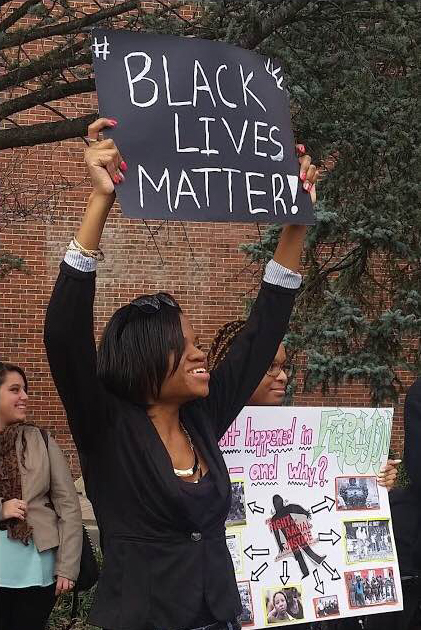
“Millennials are now stepping to the front and stepping ahead on this issue. Hands up! Don’t shoot! Was to get people thinking.” 鈥擳revena Goulbourne ’14, M.A. ’15
Goulbourne has long been troubled by the racial disparities that have affected her and members of her family and community. Last fall, she converted her anger into action.
During the chill of late fall, the plaza in front of Adelphi鈥檚 is hardly a happening place. Most students, faculty and administrators rush through on their way someplace else, preferably somewhere warm.
But at midday on December 1, 2014, the plaza was teeming with more than 200 students, faculty members and administrators who gathered for a Hands Up! Don鈥檛 Shoot! rally, organized to protest the deaths of Michael Brown, Eric Garner and others. Most came out to voice concerns about police misconduct and rampant racism. A few expressed dissenting opinions. Overall, the rally revealed deep and widespread passions, which are normally held in check on Adelphi鈥檚 polite and friendly campus.
Goulbourne, who at the time was a graduate student at the Ruth S. Ammon School of Education, organized the event with the assistance of some administrators and faculty members.
Among them were Professor Marsha J. Darling, Ph.D., who directs Adelphi鈥檚 African, Black and Caribbean Studies program; Associate Provost for Faculty Affairs and Diversity Perry Greene, Ph.D.; Professor Devin J. Thornburg, Ph.D.; and members of the Department of Public Safety.
鈥淲e pulled together the protest in four days,鈥� Goulbourne said. She added, 鈥淭he media has sometimes depicted millennials as not caring about anything, but I think the response to the Hands Up! Don鈥檛 Shoot! rally shows that we do care about how people are being treated.鈥�
Goulbourne said that she has long been painfully aware of racial profiling and its effects on people in her community, including friends and family members. 鈥淚 think there is a disconnect between how law is enforced and what regular people experience,鈥� Goulbourne said. In her opinion, 鈥淚t doesn鈥檛 matter what degree you hold: as long as you are a person of color, the reality is that you will get stopped.鈥�
The summer before organizing the rally, Goulbourne worked as an event marketing intern at the National Urban League. The paid internship was supported by Adelphi鈥檚 Jaggar Community Fellows Program, which pays undergraduates for summer work at area nonprofits. Goulbourne noted in a previous interview that 鈥淭hat internship had so much to do with the way that I chose to lead the Hands Up! Don鈥檛 Shoot! rally here on campus.鈥� Through the internship, Goulbourne learned how to engage millennials in important civic issues. Goulbourne鈥檚 motivation for planning the rally was to raise awareness on campus. 鈥淢illennials are now stepping to the front and stepping ahead on this issue. Hands Up! Don鈥檛 Shoot! was to get people thinking鈥攖o see that this is being discussed on a college campus. These become conversations in homes and communities.鈥� A teach-in that Goulbourne participated in prior to the rally underscored for her the importance of involving law enforcement in the dialogue on racial profiling. 鈥淲e had a police officer come, and he spoke about what you should do if you are stopped,鈥� she recalled. 鈥淲e also had a representative from a family who had lost a member due to police action. Congressman Greg Meeks also participated. I think we should continue to invite law enforcement to speak about a variety of issues. We should have ongoing involvement, and I think college is a great place to start this dialogue.鈥�
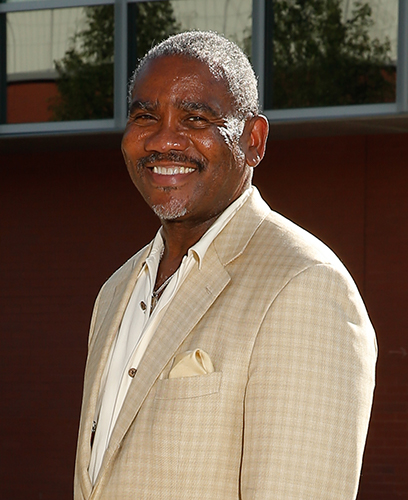
“I learned that if you are not silent, and organized, you can make a difference.” 鈥擟ongressman Gregory Meeks ’75
Gregory Meeks agrees that colleges should encourage young people to question the status quo and 鈥渘ot just go along to get along.鈥� In his view, 鈥淐ollege should be the place where, hopefully, a diverse, multicultural group of students works to make the country and the world better.鈥� At Adelphi from 1971 to 1975, Meeks鈥攐ne of a small number of African American students at the time鈥攈elped establish the Black Student Union, which he also chaired, in order to advocate for increasing the number of African American students on campus and better serving the ones already there. 鈥淚 learned that if you are not silent, and organized, you can make a difference,鈥� he recalled. 鈥淎t that time, demonstrations led to conversations.鈥� And conversations brought results. Among them were specific scholarships, such as the Malcolm X Scholarship, to support African American and Hispanic students.
For the past 17 years, Meeks has represented New York鈥檚 5th Congressional District, which encompasses southeast Queens and a small portion of Nassau County and has a largely African American population. Meeks noted that the spotlight that is now on the criminal justice system is helping him and others change the system. 鈥淲hen you talk about police brutality and racial profiling, and you start having body cameras and cell phones, you have a lot of people not being silent,鈥� Meeks said. 鈥淲hen these incidents are viewed, you have more of an interracial response, and people who were silent say, 鈥楾he black people in this country are not making this up.鈥� Now you see many states all looking at reviewing their policies.鈥�
A co-sponsor of the Excessive Use of Force Prevention Act of 2015, Meeks stressed that, 鈥淚t is not just a New York issue, it is a national issue.鈥� The legislation, introduced following the death of Staten Island resident Eric Garner, will make the use of a choke hold unlawful under federal civil rights law. 鈥淭helegislation against the choke hold is not just for Queens, New York City and New York State; it would be nationally enforced,鈥� Meeks said.
More locally, Meeks works to create stronger connections between members of law enforcement and the communities they serve, despite a tighter budget. 鈥淲hen you move from drive-by policing to having police walk the beat in communities, it has a positive impact,鈥� he said. 鈥淪ome federal dollars were cut, and there was a move away from community policing. In my district, I do town hall meetings where I consistently try to bring in someone from the police department so the police officers can get to know community leaders. I even encourage community members to go to roll calls at their local precincts so they learn the names behind the faces of the officers.鈥�
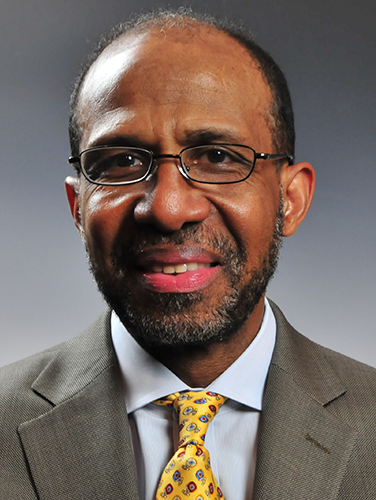
鈥淲hat hasn鈥檛 changed enough during my lifetime is the focus, or lack thereof, on the disparities in education, healthcare, services and employment”鈥擬atthew Johnson, Ph.D. 鈥�84
Like Meeks, John Jay College Professor Matthew Johnson sees the benefit of community policing, but, even more important, he asserts, is self-monitoring by police. 鈥淚t鈥檚 very difficult to get police officers to testify on other officers who they think are involved in misconduct,鈥� he said. 鈥淔or the police to improve their professional work, they must make more effort to correct issues within the ranks.鈥� He added that in many states, complaints against an officer are not discoverable, especially if they are not recorded or filed. 鈥淎n increased effort鈥� in police monitoring themselves 鈥渨ould be acknowledged by the public,鈥� Dr. Johnson said.
Officers also would benefit from better knowledge of the people they are called on to subdue. 鈥淭here have been deaths when police unknowingly try to apprehend someone suffering from mental illness.鈥�
For Dr. Johnson, vigilance is key. 鈥淥verall, the public needs to be vigilant when it comes to these issues,鈥� he said. As a professor at John Jay, where many students aspire to work in law enforcement, Dr. Johnson has a hand in influencing future enforcers.
Dr. Johnson originally applied to Adelphi鈥檚 doctoral program in psychology with the intention of becoming an expert witness. He knew Dean Gordon F. Derner, Ph.D., and was impressed by his commitment to diversity. 鈥淭he year before my admission into the Derner Institute, I was told that 25 percent of all blacks with doctorates in clinical psychology had attended Adelphi.鈥�
Today, Dr. Johnson is a teacher and scholar who examines how psychology informs due process. He also has extensive experience as a forensic examiner and expert witness. He is intimately familiar with the prevalence of false confessions, especially among the most marginalized defendants.
He noted that clients with reading deficits or those who undergo long interrogations are more likely to give false confessions. 鈥淚n New York, police can interrogate a person for five, six or seven hours and only video the section where the suspect makes the admission鈥� so you don鈥檛 know if the person is guilty or just tired of being questioned, said Dr. Johnson.
鈥淭here are times,鈥� Dr. Johnson said, 鈥渨hen I have to evaluate whether a person was competent to make the admission.鈥� Another fact that must be established by a defense attorney, assisted by an expert witness, is 鈥淗ow much did the police tell the individual. Sometimes the police tell them, 鈥榃e know you did it. Your buddy already said you did, so this is your chance to admit.鈥欌��
While police accountability is vital to Dr. Johnson, he readily acknowledges that the spotlight on law enforcement has cast a shadow on the other factors that lead to distrust and ongoing racial tension in some communities. 鈥淲hat hasn鈥檛 changed enough during my lifetime is the focus, or lack thereof, on the disparities in education, healthcare, services and employment that some communities have and others do not,鈥� he said. 鈥淎ll of these factors accumulate and the police become the most visible point of social antagonism.鈥�
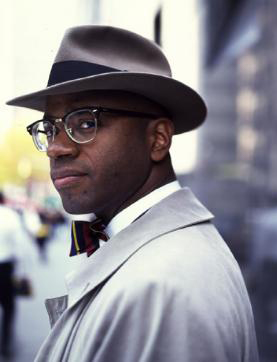
鈥淚 look at these issues not just as a lawyer, but also as a father and a husband.鈥濃�擜nthony Ricco 鈥�78
Anthony Ricco describes himself as 鈥渁 kid from Harlem鈥� who came to Adelphi with the support of the Malcolm X Scholarship that Meeks helped establish. 鈥淎pparently, people saw things in me that I didn鈥檛 see for myself,鈥� Ricco, now a prominent criminal defense attorney, said. 鈥淭he boy that Adelphi gave a chance with a scholarship is now devoted to excellence and committed to working toward it.鈥�
Ricco鈥檚 view of the criminal justice system is intimate and personal. He has defended murder suspects ranging from Corey Arthur, the young African American man tried for the 1997 murder of his white high school teacher, Jonathan Levin, to a co-conspirator in the Sheik Omar Abdel Rahman terrorism case.
For Ricco, the criminal justice system is a mirror for society as a whole. 鈥淚n the criminal justice system, we see the racial dynamics of America being played out鈥攂ig time,鈥� he said.
In the courtroom, Ricco observes how prosecutors can shape the outcome, even by not fully informing jurors. 鈥淚n the case of Eric Garner, what you really had was reckless endangerment which resulted in death. However, if the grand jury is not instructed in this way,鈥� then there will not be a sentence based on reckless endangerment. He added, 鈥淎 prosecutor can shape the material that a grand jury sees, and the general public has not been allowed to see the Garner case grand jury testimony.鈥�
Noting that some have accused him of police bashing, Ricco said that that couldn鈥檛 be farther from the truth. 鈥淚f someone bashes in my window to rob me, I鈥檓 going to call 911, and I want the police to do what they need to do to keep me and my family safe,鈥� he added.
鈥淚 look at these issues not just as a lawyer, but also as a father and a husband,鈥� said Ricco, who, after completing his education, returned to Harlem to settle and raise his family.
Ricco expressed cautious optimism that change is possible. 鈥淚t鈥檚 going to take a special breed of judges, prosecutors and police to change things鈥攖hose that can look at today鈥檚 problems and see beyond race. One of the things I learned鈥as that the goal of the African American lawyer is to see that African Americans have all the rights in the courts as everyone else. No more and no less.鈥� Stressing that he believed in the U.S. Constitution and its amendments, as well as the right to counsel and the legality of search and seizure, Ricco added, 鈥淲e live in a country of beautiful laws, but we allow those laws to be compromised.鈥�
For further information, please contact:
Todd Wilson
Strategic Communications Director
p 鈥� 516.237.8634
e 鈥� twilson@adelphi.edu