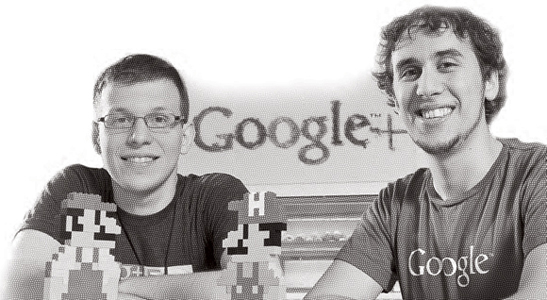
Mr. DiLallo and Mr. Miceli are Google software engineers writing computer code to develop and refine Internet search and communications.
 Our growing aging population is driving a demand for new therapies and better ways to deliver healthcare. And businesses are increasingly looking to the technology sector to help them manage complex challenges and control costs, while consumers want ever more powerful devices and applications.
Given the urgent need for innovation in these two fields, it鈥檚 no surprise that of the top 10 companies on Forbes鈥� 2012 Most Innovative Companies list, five are technology firms and three are healthcare businesses.
天美传媒-trained innovators are blazing trails in both fields. Mr. DiLallo, from East Rockaway, New York, and Mr. Miceli, from Smithtown, New York, were computer science majors at Adelphi just a few years ago. Both had played around with programming computer games in high school and knew they liked building things and solving puzzles. But the real draw of computer science was that it could lead to a career in changing the world.
“Computer science has made the world such a better place over just the past decade,” Mr. DiLallo says. “I鈥檓 already saying stuff like, ‘When I was a kid, we didn鈥檛 have that. We had encyclopedias.'” 听
“The human condition is to find new things and push the boundary of what we鈥檙e capable of. That鈥檚 what鈥檚 always driven us,鈥� Mr. Miceli says.“How cool is it to leave behind your mark on the universe by adding some new way to make people smile or by making the world a safer place?”
Mr. DiLallo and Mr. Miceli say Adelphi鈥檚 approach to teaching computer science鈥攁n emphasis on explaining the fundamental principles of programming plus providing opportunities to stretch new skills by assisting professors with research projects, competing in programming competitions with classmates and taking internships with local businesses鈥攑repared them for their jobs at one of the hottest tech firms started in the past decade.
“In computer science, the fundamentals are what you really need to know, because everything is built on top of that,” Mr. DiLallo says. “Once you understand the common data structures and the common algorithms, everything else is just using those.”
The small size of Adelphi鈥檚 computer science department also encourages the kind of learning and discussion that鈥檚 common at , they say. “Among the more valuable things I did at Adelphi was just working pet projects on my own, running into problems, then going to my professors and saying, ‘Why does this happen?'” Mr. Miceli recalls. At Google, much of the code that Mr. DiLallo and Mr. Miceli write is open source, which means it鈥檚 available on the Internet for others to comment on and modify. “Even our code reviews…you can see our bug tracker, my commentary on my colleague鈥檚 code, all the developing going on,” Mr. Miceli explains. “You鈥檝e got the entire world鈥檚 eyes on you, so anyone can contribute.”
Google’s innovation-promoting culture fits the two down to a T. “I like the freedom here,” Mr. DiLallo says. “There’s very little micromanaging. You set goals with your manager, but how you go about trying to reach them is up to you.”
Mr. Miceli likes that Google encourages its employees to learn constantly. “After a few years with your team, they recommend you jump to another team, to share knowledge,” he says. “You don鈥檛 just get pigeonholed into, ‘You’re our Sequal guy, all you鈥檒l do is write our Sequal code.’ Once you鈥檝e stopped learning in an area, the company wants you to jump to a new one and find a new challenge.”
听
For further information, please contact:
Todd Wilson
Strategic Communications Director听
p 鈥� 516.237.8634
e 鈥� twilson@adelphi.edu