Assistant Professor of Sociology Jessie Klein, Ph.D., has attracted attention for her research and book on bullying.
By Charity Shumway
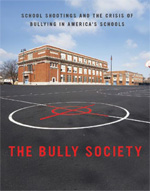
Published by NYU Press in March 2012, The Bully Society: School Shootings and听the Crisis of Bullying in America鈥檚 Schools by 天美传媒 Assistant Professor听of Sociology Jessie Klein, Ph.D., has attracted attention from public and independent听school leaders, academics, nonprofit leaders and the media. Because of the book, Dr.听Klein has been invited to comment on incidents of school violence by CNN and WNYC听Radio, among others.
Rather than seeing school shootings as extreme aberrations, through extensive听interviews with students, teachers and parents, Dr. Klein has come to see shootings听as something more troubling. 鈥淪chool shooters were telling us in the most brutal and听horrific way what was going on in schools generally,鈥� Dr. Klein says. It鈥檚 a bold thesis听and one that has drawn controversy, particularly in the pages of The New York Times.听School communities are at the heart of Dr. Klein鈥檚 book. To address bullying, many U.S.听schools have adopted zero tolerance policies, excluding students through suspensions听and expulsions. Dr. Klein sees this as a failure.
鈥淢ost students who have been bullies have also been victims,鈥� she says, 鈥渁nd it鈥檚 the听wrong way to go, profiling the bully or the victim.鈥� Instead, Dr. Klein proposes that we听should work to change school communities more broadly. 鈥淲e need to find a way to听help students feel responsible to one another.鈥�
Dr. Klein鈥檚 research identified a number of factors that contribute to hostile school听environments. Schools that stress hyper-independence over community leave students听in need feeling like they have no one to rely on but themselves. Many school shooting听perpetrators say they felt that they had no one to turn to and that they believed they had听no choice but to take matters into their own hands. 鈥淲e have this idea that schools are听supposed to be about knowledge, not the emotional support of a human being. We are听expecting too much from kids,鈥� Dr. Klein says.
Dr. Klein also identified a pernicious culture of normative gender that contributes to听school hostility. 鈥淢ost of the slurs that kids get called relate to gender and sexuality,鈥� Dr.听Klein says. Boys often feel they are allowed to express anger, but if they show sadness听or other vulnerabilities, they are called names likening them to girls or homosexuals.听Girls are also committing more violence than in previous decades and find they,听too, are pressured to be masculine, meaning aggressive and violent. Students who听committed school shootings were often teased for not measuring up on these kinds of听gender norms. Dr. Klein argues that opening up the continuum of what it means to be听masculine, in particular, is critical to changing school bully societies.
Ultimately, Dr. Klein鈥檚 book concludes that we need to help students become leaders听in their schools, committed to creating compassionate communities. 鈥淪chools can be听the hope for our future if they develop communities where students can bond with each听other and be there for one another,鈥� Dr. Klein says. 鈥淭he difference when students feel听supported by their community is phenomenal.鈥�
For further information, please contact:
Todd Wilson
Strategic Communications Director听
p 鈥� 516.237.8634
e 鈥� twilson@adelphi.edu