The high-need areas in the last decade have been special education, TESOL (Teaching English to Students of Other Languages)/bilingual education and, now, early childhood education.
 Questions for鈥�
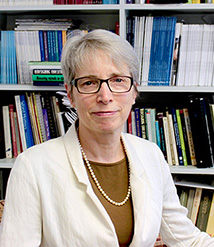
Jane Ashdown, Ph.D., dean of the , 天美传媒.
What are the areas of growth and opportunity now in education?
Dr. Ashdown: The high-need areas in the last decade have been , and, now, and, historically, and . Those continue to be opportunity areas for growth. They鈥檙e opportunity areas because jobs are available in those areas. Our TESOL program has seen a lot of growth in enrollment. That鈥檚 being driven largely by interest from beyond the U.S. International students are interested in our program. and have also seen a lot of interest in the [Ammon] School of Education (SOE). Our and programs as well.
Is there a need for more multicultural speech-language pathologists?
Dr. Ashdown: Yes. We have a , but we don鈥檛 have many students. We don鈥檛 have a particularly diverse pool of speech-language pathologists.
How is Adelphi adapting to the changing demands in teacher preparation?
Dr. Ashdown: That is an interesting question. It鈥檚 one that preoccupies me quite often. Historically, SOE, because of its demands, has been able to offer everything鈥攁ll programs, all certifications. In a demographically shrinking population, in a school that tends to draw from its locale and with rather limited job prospects in some areas, I think we have to ask ourselves some hard questions about whether we can continue to offer all of the current programs. On the positive side, maybe it鈥檚 about identifying what our signature programs are. That鈥檚 a difficult conversation because it means we have to be selective about the programs we promote and allocate resources to match regional needs and local needs in terms of teachers.
Would one of the programs Adelphi should promote more extensively be early childhood education, particularly with ushering in universal prekindergarten in New York City public schools?
Dr. Ashdown: I think it is. It鈥檚 not just about what鈥檚 happening in the job market. We have one of the few programs regionally that offers placements and experiences in infant and toddler educational environments, and early intervention in terms of working with babies. We have special placements in those programs for students so they are well prepared in those areas. That鈥檚 one of our signature programs. Also, we have the . So, we have in-house expertise in a lab environment, and special placements in infant and toddler settings. Combine that with what鈥檚 happening in New York City in early childhood education and it鈥檚 a no-brainer that that鈥檚 a program we should be promoting.
You are among a group of deans from schools of education to meet with New York City schools chancellor . I understand other meetings will take place periodically. What do these meetings signify?
Dr. Ashdown: I think it shows that the sees teacher preparation at universities such as ours as a joint venture. Historically, schools in New York City tended to be seen as the problem, not the solution. The report that came out鈥斺�攕howed that the city was pleasantly surprised and impressed at how well our candidates were doing鈥攖hat they were staying in New York City to teach and that they were going a long way toward meeting the city鈥檚 needs in terms of teaching in high-need schools and high-needs fields. Prior to that report, the perception held in the city was the only way to get good teachers was through or the fellows program. Interestingly enough, the DOE has not, to my knowledge, produced a report on that pool of teachers in the system. I鈥檓 curious as to why they haven鈥檛 done that. My guess is they haven鈥檛 done that because the teachers who come from Teach for America or the fellows program don鈥檛 stay. But the regional schools of education such as ours are in it for the long haul. We鈥檙e producing graduates who are committed to living in the area and teaching here long term.
Do you encourage Adelphi graduates to teach in New York City?
Dr. Ashdown: Many of our faculty live in New York City. Many of our faculty and administrators have relationships with schools in New York City. Also, our students come from all over New York City. I just spoke to a graduate who completed his student teaching at in Queens. He loved it. We have partnerships with , and a bunch of elementary schools. We have a number of substantial partnerships and many students who teach in New York City.
Do you see standards as a positive development?
Dr. Ashdown: I do. I鈥檓 concerned that much of the criticism about the standards is coming from people who have not actually read them. I was just looking at the language arts standards, and there鈥檚 nothing here that we aren鈥檛 teaching or that schools should not be doing. A lot of it reflects good teaching practice. A lot of it emphasizes good reading and writing and achieving literacy across all areas. It鈥檚 a bit baffling to me that there has been such concern about the Common Core standards. However, the Common Core standards are associated with new tests. Teachers understandably are concerned about whether they are preparing their students adequately. The schools may need help updating the curriculum or getting new materials. The Common Core standards do not establish policy concerning pedagogy, timing or pacing or which textbooks to use. There is a lot of leeway.
In the last year, said New York schools are 鈥渢est crazy.鈥� Do you believe there is too much testing, and, if so, how does that tie in with the issue of the for teachers and principals?
Dr. Ashdown: My firm belief is we do way too much testing of students compared to other school systems internationally鈥擟anada, Europe, Hong Kong. Teacher and principal assessments based on testing are a problem. The New York State DOE has looked at that as well and is trying to make some changes. Whether these tests that assess student knowledge are the best way to assess teachers鈥� effectiveness is very questionable. Certainly, student gains in learning should be part of a teacher鈥檚 assessment. But we have no evidence that a growth score alone or a value-added score should be used to assess a teacher. There are other ways to assess the effectiveness of a teacher: Students could be surveyed about their experiences with a teacher; we could look at ways teachers mentor student teachers or less experienced colleagues; we could look at the role the teacher plays in that particular school. Ultimately, the teacher can only be as good as the school in which he or she teaches. It鈥檚 very difficult to be an outstanding teacher in a dysfunctional school.
Where do you stand of the issue of charter schools versus public schools?
Dr. Ashdown: I served on the board of trustees of a charter network in Central Brooklyn for seven years, , and it鈥檚 still going strong. Several of our graduates got positions in the network and have done very well. One of the concerns about New York City charter schools is if you divert funds into the smaller network, it takes away from the larger pool of money that the traditional public schools can use. There has been concern that the charter schools don鈥檛 take students with special learning needs, or they take space away from public schools. The space issue has been a problem. Chancellor Fari帽a is right to try to defuse the issue by reexamining the space criteria to make sure that neither the charter school nor the public school sharing the same space is shortchanged.
In the charter school system in which I served on the board, we had a similar proportion of special education students compared to the public schools. Is there some selection bias? I think there probably is. Are there parents who are more knowledgeable about the lottery system used to select students for the charter school? Yes, there is evidence of that. But the research is a bit mixed about charter school outcomes. The movement originally was toward creating more innovative curriculum and experimenting toward a different school design and staffing structure鈥攁 longer school day, longer school year, smaller classes, for example. But in terms of curriculum, I don鈥檛 believe they have been more innovative at all. Because they鈥檙e held to existing state standards in order to renew their charters, they鈥檝e spent a lot of time on preparation to make sure they鈥檙e successful. The other complaint is charter schools have a lot of people from hedge funds and Wall Street firms giving them extra money. In Explore Schools, when there were extra funds donated by individuals, it typically went to enrichment activities. That鈥檚 no different from what happens in public schools on the Upper West Side when affluent parents contribute extra money for a music teacher. New York City depends on the success of Wall Street for its tax revenue, which goes into funding its public schools. So to imagine that there is some pure stream of funding for schools and that we should not be taking money from wealthy individuals, I find a bit disingenuous.
For further information, please contact:
Todd Wilson
Strategic Communications Director听
p 鈥� 516.237.8634
e 鈥� twilson@adelphi.edu